“The team of nurses in the TMS department are all fantastic, and I'd really like to thank Ash in particular for her support & empathy!”

TREATMENT FOR DEPRESSION
Repetitive transcranial
magnetic stimulation
A non-invasive treatment option for adults with depression. Learn about rTMS, what a session feels like and how to discuss an assessment with your doctor.
PERTH, WESTERN AUSTRALIA
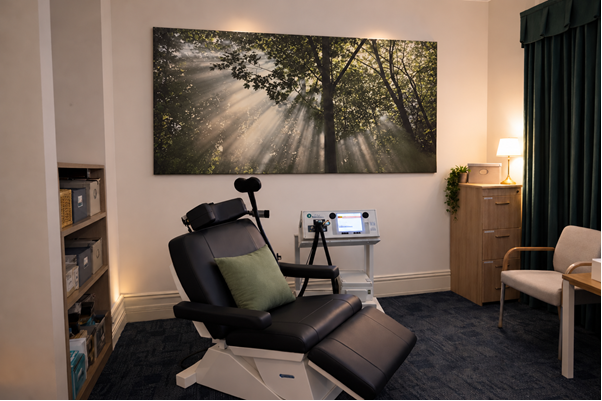
ProcedureNon-invasive
During treatmentAwake, without anaesthesia
AccessSpecialist assessment
UNDERSTANDING YOUR CARE
Understanding rTMS
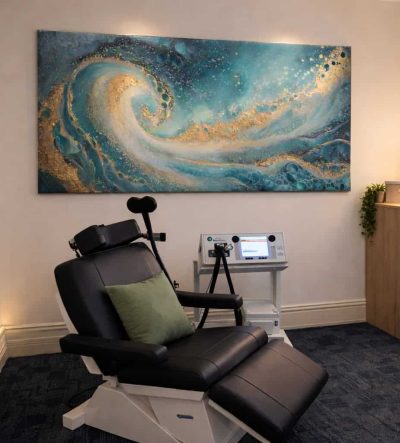
rTMS uses repeated magnetic pulses to stimulate areas of the brain involved in mood. A coil rests against your scalp while you remain awake, without sedation or a general anaesthetic.
It may be an option for adults whose depression has not improved enough with medication or psychological treatment, or who have difficulty tolerating medication. Your psychiatrist will assess whether it is appropriate for you. Responses vary, and improvement cannot be guaranteed.
FEES & MEDICARE
Your treatment costs,
made clear.
$0out-of-pocket costs
for included outpatient services
for included outpatient services
For eligible Medicare patients, Perth Clinic’s outpatient TMS program is fully bulk billed, from the initial assessment through to the end-of-treatment review.
Medicare eligibility and coverage must be confirmed. Inpatient care and services outside this outpatient program may have different funding arrangements.
Ask our team about eligibility →INITIAL COURSEUp to 35
treatment sessions
ELIGIBLE RETREATMENTUp to 15
additional sessions
These Medicare treatment limits apply over your lifetime; they do not reset each year. Mapping is a separate service.
What’s included at no cost?
| Service | Your cost |
|---|---|
| Initial TMS screening and eligibility assessment | $0 |
| TMS information and education | $0 |
| Psychiatrist TMS assessment and prescription | $0 |
| Individualised brain mapping and motor threshold assessment | $0 |
| Up to 35 TMS treatment sessions in the initial course | $0 |
| Care from specially trained TMS nurses | $0 |
| Regular monitoring of symptoms and progress | $0 |
| Standardised mental health questionnaires | $0 |
| Treatment reviews and progress assessments | $0 |
| End-of-treatment review and outcome summary | $0 |
| Ongoing treatment recommendations and discharge planning | $0 |
No gap fees apply to the included services once your eligibility and coverage are confirmed.
Who can access an initial Medicare course?
The initial course is for adults aged 18 or older with a diagnosed major depressive episode who have not previously received TMS in a public or private setting.
You must also have tried at least two different classes of antidepressant medication without satisfactory improvement, unless these medicines are unsuitable for medical reasons, and have undertaken psychological therapy where appropriate.
Your psychiatrist checks that medication trials meet Medicare’s dose, duration and treatment-adherence requirements. A referral alone does not confirm eligibility.
What about retreatment or maintenance TMS?
If you responded satisfactorily to an initial Medicare course and depression returns after a period of remission, you may qualify for up to 15 retreatment sessions. This requires a psychiatrist’s reassessment and remapping, at least four months since the last initial-course session, and confirmation of Medicare’s other criteria.
Retreatment is not automatic. Ongoing maintenance sessions are a separate clinical consideration and should not be assumed to be covered by this entitlement. Our team will explain your eligibility and any costs before further treatment.
Not eligible, or used your Medicare sessions?
Our team can discuss other access options, including self-funded treatment and whether another funding arrangement applies. Inpatient treatment has different funding arrangements. We will explain the costs that apply to your circumstances before you begin.
Contact the TMS teamGETTING STARTED
Your pathway to treatment
From your first referral to ongoing reviews, here is how to access rTMS and what to expect along the way.
Start with a referral
Speak with your GP or psychiatrist. They can send a referral so our team can review your symptoms, treatment history and health information. View the online referral form →
Talk with our clinical nurse
Our nurse will contact you for screening and an information call. Discuss your questions, medications, implants, seizure history, eligibility and appointment arrangements.
Assessment and mapping
A psychiatrist trained in TMS assesses your suitability and prescribes your plan. Mapping sets the treatment location and intensity, usually at your first treatment appointment.
Attend your sessions
You sit awake in a treatment chair while a trained nurse delivers TMS. You may hear clicking and feel tapping on your scalp. Tell your nurse if you feel uncomfortable.
After your appointment
Most outpatients can return to usual activities, including driving, if they feel well and have no other medical restrictions. Follow your treating team’s advice.
Review your progress
Clinical reviews and standardised questionnaires help track your response. Your team will discuss an end-of-treatment review, ongoing recommendations and follow-up care.
Want more detail? Explore the treatment process →
REFERRALS
Online rTMS referral
For GPs and psychiatrists referring patients for Medicare-funded rTMS. If you are considering treatment, speak with your doctor about a referral.
Open referral form in a new tab ↗A CONSIDERED APPROACH
What about side effects?
Possible side effects include scalp discomfort, headaches, temporary facial muscle twitching and tiredness. Serious complications, including seizures or a shift into mania (unusually elevated mood or energy), are rare.
Your team will screen for risks before treatment and monitor you throughout. Tell them about medications, implants and any changes in your health. TMS is not suitable for everyone.
Read about safety and side effects →YOUR QUESTIONS
A little more detail,
when you need it.
Choose a topic, then open the questions that matter to you.
Still have a question? Email our team →
Understanding TMSHow it works and who it may help
What is TMS?
Transcranial magnetic stimulation (TMS) is a non-invasive, evidence-based treatment for depression. Repetitive TMS, or rTMS, uses targeted magnetic pulses delivered through a coil against the scalp. You remain awake and alert, without anaesthesia or sedation.
How does TMS work?
The magnetic pulses stimulate nerve cells in brain regions involved in mood. Repeated stimulation can change activity and communication within these networks, supporting changes associated with improved mood.
Is TMS the same as ECT?
No. TMS does not intentionally cause a seizure, require a general anaesthetic or typically cause memory impairment. ECT uses a controlled electrical stimulus to cause a brief seizure under general anaesthesia. Both are established treatments for depression, but work differently. Your psychiatrist can explain which may be appropriate.
Who may benefit from TMS?
TMS may be suitable for adults with depression who have not improved enough with antidepressants or psychological treatment, or who have difficulty tolerating medication. A specialist assessment is needed. Clinical suitability and Medicare eligibility are separate considerations.
Starting treatmentReferrals, hospital admission and Medicare
Do I need a referral for TMS?
Yes. Perth Clinic accepts referrals from GPs and psychiatrists. A specialist assessment determines whether TMS is clinically appropriate and whether you meet Medicare criteria. If you already see the psychiatrist who will provide your TMS care, ask the team whether a new referral is needed.
Do I need to be admitted to hospital?
Not necessarily. Perth Clinic provides TMS for inpatients and outpatients. Most outpatients attend scheduled appointments and return to their usual activities afterwards, subject to their treating team’s advice.
Is TMS covered by Medicare?
Eligible patients can receive rebates for up to 35 initial treatment sessions, with mapping as a separate service. Perth Clinic fully bulk bills the included outpatient program for eligible patients. See the fees and Medicare section for inclusions, eligibility and conditional retreatment. The team confirms coverage before you begin.
Will I need an MRI scan?
An MRI is not routinely required before TMS. Your psychiatrist may recommend additional investigations if needed for your care.
The treatment processAppointments, session length and nursing care
What happens at my first appointment?
Your initial treatment appointment includes mapping to identify the treatment location and stimulation intensity suited to you. A psychiatrist trained in TMS performs mapping and prescribes your individual treatment plan. The team will explain your appointments and answer questions before treatment.
How many treatments will I need?
An initial course involves regular sessions over several weeks. Eligible patients can receive up to 35 Medicare-funded treatment sessions. Your psychiatrist prescribes the number and schedule suited to you, and your team will explain the plan.
How long does each session take?
At Perth Clinic, stimulation may take approximately 3 minutes for intermittent theta burst stimulation (iTBS), or around 20 minutes for certain conventional TMS protocols. These are stimulation times, not the full appointment length. Allow extra time for positioning, preparation and clinical assessment; your team will confirm how long to set aside.
What will I feel during treatment?
You may feel tapping on your scalp and hear clicking sounds from the coil. Some people notice mild twitching around the forehead or face. You remain awake and can speak with your nurse throughout. Let them know about any discomfort.
Who administers TMS?
Specially trained nursing staff deliver TMS at Perth Clinic under the prescription and clinical supervision of a qualified psychiatrist. Your treatment plan is individualised and your progress is monitored throughout.
Safety and side effectsComfort, medication, driving and implants
Is TMS painful?
Most people tolerate TMS well. Some experience scalp sensitivity, tapping discomfort or headaches, especially in the first few sessions. Discomfort often improves as treatment continues. Tell your nurse so they can help manage it.
What are the possible side effects?
Possible side effects include scalp discomfort, headaches, temporary facial muscle twitching and tiredness. Serious complications, including seizures or a shift into mania (unusually elevated mood or energy), are rare. Safety screening and ongoing monitoring help the team assess and manage these risks.
Can I continue taking my medication?
In many cases, yes. TMS is often provided alongside antidepressants and psychological treatment. Tell your team about all medications and any changes during your course. Do not stop or adjust prescribed medication without medical advice.
Can I drive after TMS?
Most people can drive and return to usual activities after treatment, provided they feel well and have no other medical restrictions. Follow any individual advice from your treating team.
Can I have TMS if I have metal implants?
Some metal implants or implanted electronic devices may be unsafe near the treatment coil. Tell the team about all implants and devices before treatment so they can assess whether TMS is safe for you.
Results and ongoing careProgress, further treatment and everyday support
How effective is TMS for depression?
TMS has a substantial evidence base for treating depression, particularly when earlier treatments have not provided adequate relief. Responses vary, and improvement cannot be guaranteed. Your psychiatrist can discuss what this means for your situation.
When will I start noticing improvements?
Some people notice improvements within the first few weeks; others may notice meaningful changes later in the course. Your team will monitor progress through clinical reviews and standardised questionnaires.
How long do the benefits last?
This varies from person to person. Some maintain improvement for an extended period, while others have symptoms return and need further assessment or treatment.
What is maintenance TMS, and how does retreatment differ?
Maintenance TMS involves ongoing sessions after an initial course to help sustain improvement. Retreatment is a further course considered when symptoms return after a response. The schedule depends on your clinical needs. Medicare’s conditional retreatment entitlement provides up to 15 sessions for eligible patients; it does not mean ongoing maintenance is automatically funded. Read the eligibility and timing conditions.
What can I do to support my TMS treatment?
Where possible, maintain healthy sleep habits, be physically active, stay connected with others, participate in psychological therapy or therapeutic groups, and follow your prescribed treatment plan. These activities support overall mental health and recovery; they have not all been shown to directly increase TMS effectiveness.
What happens if TMS doesn’t work for me?
Your psychiatrist will review your response and discuss next steps. These may include medication changes, psychological therapies or other treatment options.
Everyday practical questionsCoffee, phones, missed appointments and exercise
Can I drink coffee during TMS?
You can generally continue your usual caffeine intake. Avoid major changes in consumption and speak with your treating team if you have concerns.
Can I use my phone during treatment?
Ask your nurse when it is appropriate to use your phone, read or listen to audio. This depends on positioning, safety and your treatment protocol.
What happens if I miss a session?
Occasional missed appointments can usually be accommodated. Contact the TMS team as soon as possible so they can review your treatment schedule.
Can I exercise during my TMS course?
Most people can continue their usual exercise routine if they feel well and have no other medical restrictions. Follow your treating team’s advice.
No questions match that search. Try a shorter word, clear your search or ask the TMS team.
PATIENT FEEDBACK
In our patients’ words.
Personal comments about staff friendliness and communication at Perth Clinic.
“The TMS nurses at Perth Clinic were absolutely fantastic - super empathetic and professional”
“The Perth clinic staff were consistently caring, professional, and supportive”
“Ash and the team are really amazing.”
“The nurses are all really nice.”
1 of 5
Selected excerpts about staff and communication. These comments do not describe or predict treatment outcomes.
ACCESSING CARE
Ask about an rTMS assessment
Speak with your GP or treating psychiatrist, or email or text our TMS team to discuss referrals, Medicare eligibility and costs. If you are not eligible for Medicare coverage, or have used your covered sessions, we can explain other ways to access treatment.
Email the teamtms@perthclinic.com.au
SMS enquiries only0436 026 123
Please send questions by text message. This number is not regularly available for calls.
For general enquiries. Please avoid sending sensitive health information by email or SMS.
FURTHER INFORMATION
Read more, at your pace
Clinic resources and independent clinical information.
General information does not replace advice from your treating team. Individual suitability, arrangements and costs require confirmation.